I went to Pratt for industrial design, which is a fancy way of saying I learned to think about objects before I made them. Form, function, the weight of a thing in the hand. When I came back to Newport and started the bench, I did not want to make jewelry that pretended to be something it was not. No faceted stones sold as miracles. No 'healing crystal' language. Just metal, and sometimes a stone I found, worked by hand.
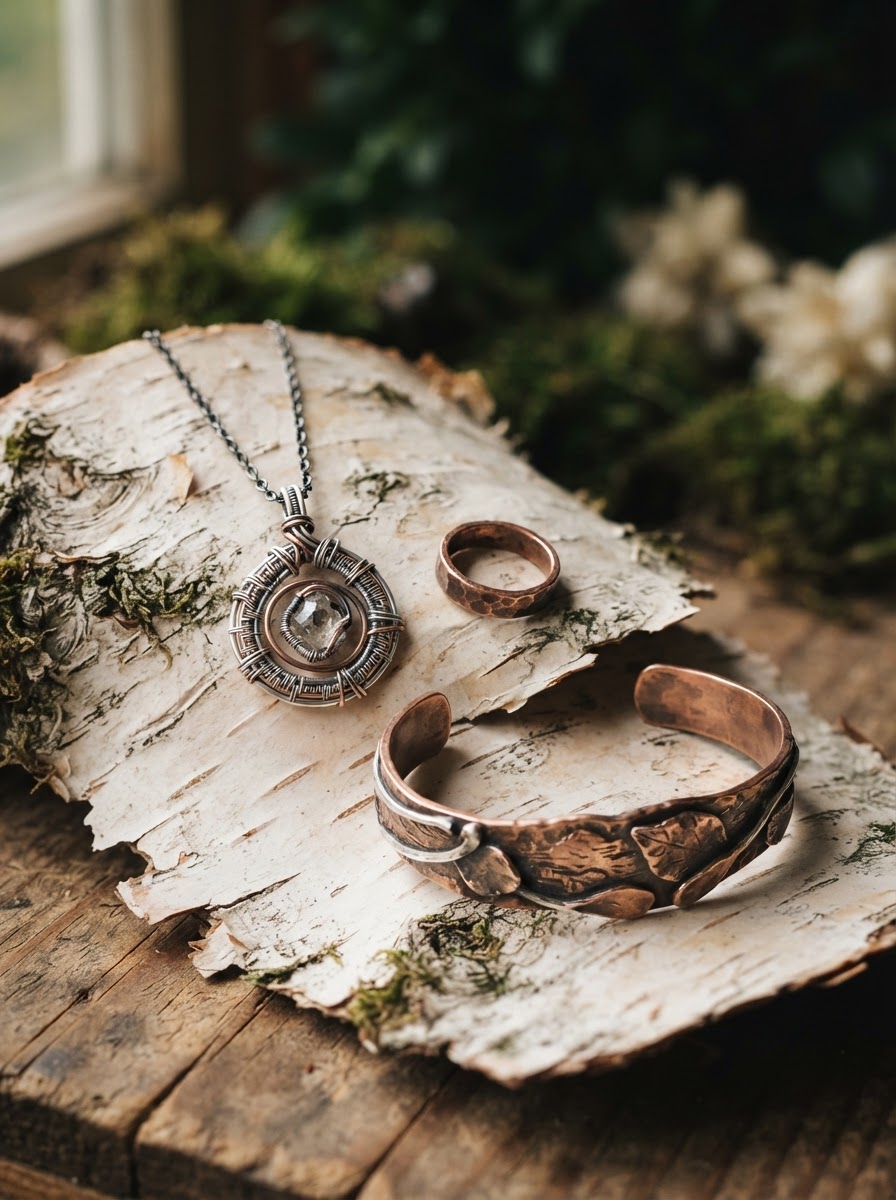
Found-form is the word I use. It means the piece comes from a shape that already existed — a leaf, a bud, a switch of willow, the texture of bark lichen — and I try to get the metal to remember it. A copper leaf is cut and hammered, not cast, so each one is a little different. A river stone is set in silver the way the stone already wants to sit, not the way a bezel would force it.
The materials are honest. Copper, which I love because it ages. Sterling silver, which most people want for ears. Sometimes a small river pearl, sometimes a Vermont stone I picked up and could not put down. I do not use stones I cannot identify, and I do not make claims about them. A stone is a stone. It is beautiful because it is old and because it is from here, not because it will fix anything.
The bench is slow on purpose. A pendant takes an afternoon, a ring takes longer because the stone has to choose its setting. I do not make the jewelry in batches the way I make fire cider. Each piece is one piece, and when it is gone it is gone, and the next one will be its cousin, not its twin. That is the part that is hard to sell online, and the part I will always tell you about in person.
What I tell people who are nervous about copper: it will change color. That is the point. A copper cuff greens a little against the skin, darkens at the edges, and tells you where it has been. If you want a piece that never changes, buy the silver. If you want a piece that keeps a record, buy the copper. Both are honest. Neither is better.
The price is the price because of the time, not the materials. A $28 stud and a $68 ring are both a morning of bench work and a lifetime of paying attention to small things. I do not discount the jewelry because the hours are the hours. I will, sometimes, put a piece in the Woods & Wrist box, because a box is a chance to send a piece out into the world with a jar of honey and a note.
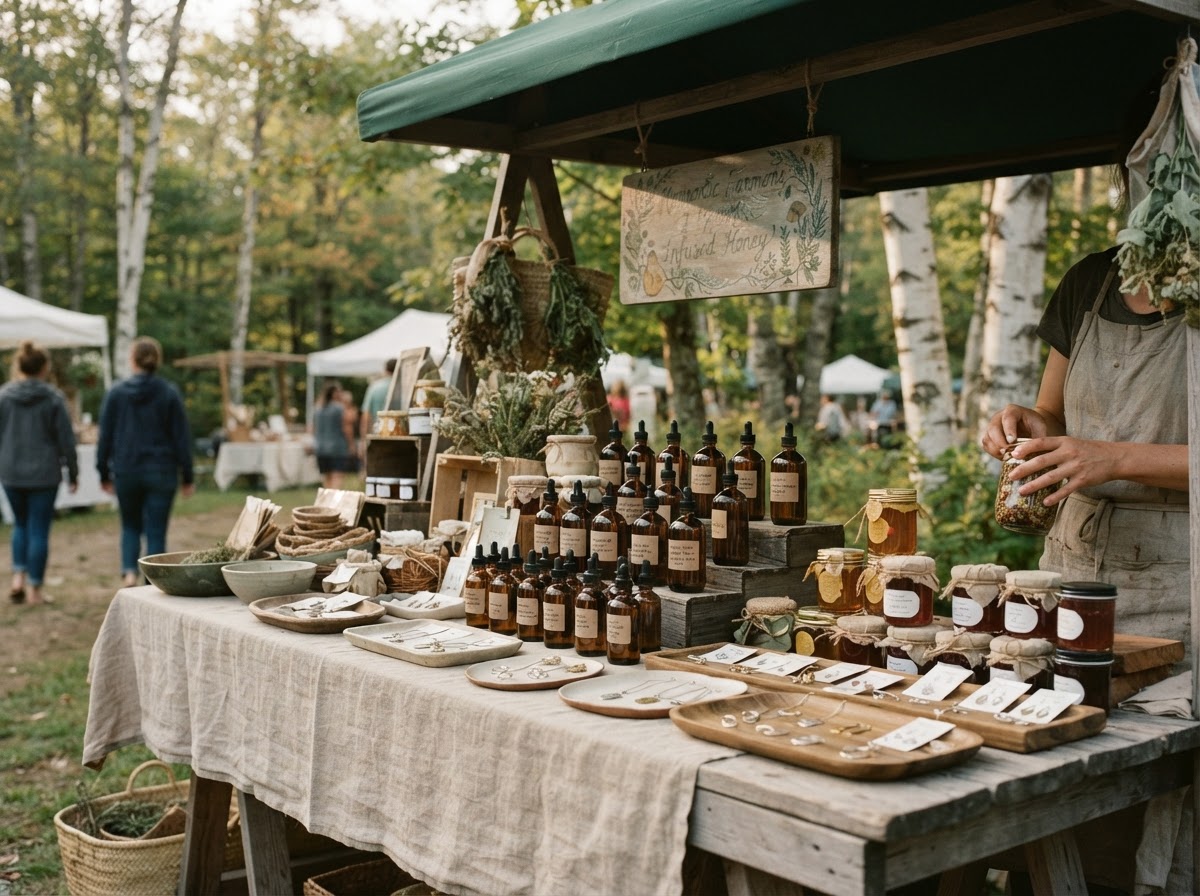
If you are looking for the jewelry, it is on the back of the booth table most Saturdays, and it is in the shop under For the wrist and throat. If you want something specific, text me. I am not a factory, and I like a specific ask. The bench is one person, and the bench is where the found-form work happens, one piece at a time.
These offerings are traditional botanical preparations and foods. They are not intended to diagnose, treat, cure, or prevent any disease. Forage and consume only what you can identify with certainty.
Written by Serena Morgan · Newport, Vermont